


Artificial intelligences (AIs) like ChatGPT or Microsoft Copilot have changed the way many people access information online, providing an interactive search-engine that feels like a conversation. But what does online AI-generated advice for urostomates look like and is it reliable?
What does an AI do and when might I end up interacting with one?
Some AI programs, like ChatGPT, are standalone websites, and work like a chatty conversation between you and the computer. This is the sort of AI you actively need to find, so you know when you visit the website that you are engaging with artificial intelligence.
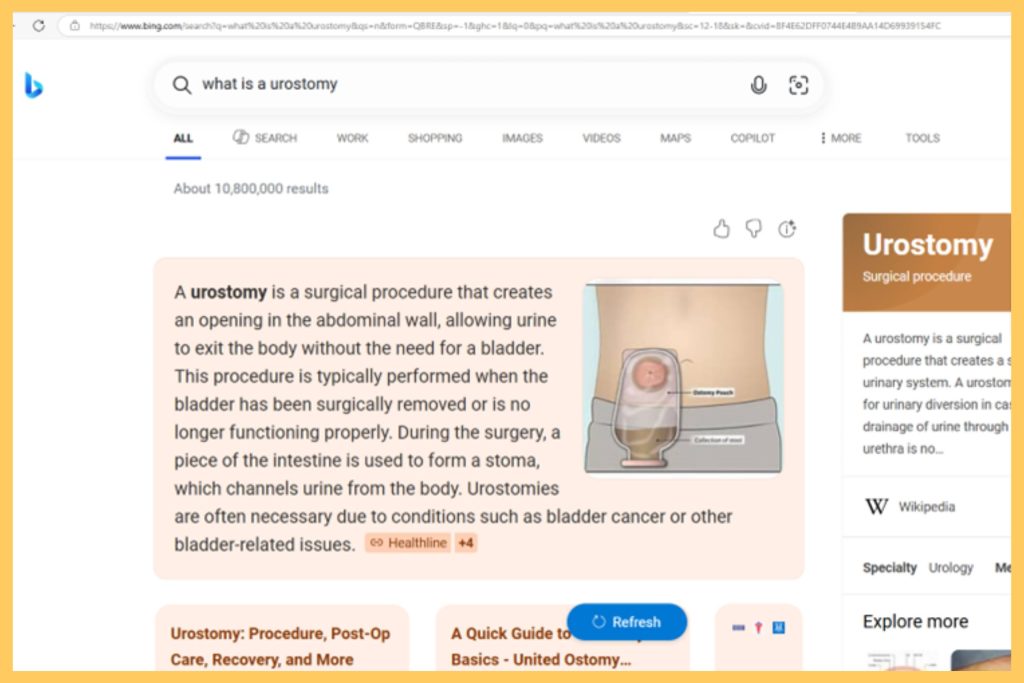
But in other instances, you may be engaging with AI without realising it. For example, some search engines, like Bing, have introduced a summary box at the top of search results (see example below), which aims to answer your query but is generated by AI, not written by a human. You may not have even noticed this. This can be handy, but review it with a touch of caution.
Is AI-generated information reliable?
AI tools pull together data from all over the internet, in the blink of an eye, and much of this is not about urostomies or urostomates. This means the content AI produces is, in essence a broad summary of available information, and this can be stoma generic, rather than urostomy specific.
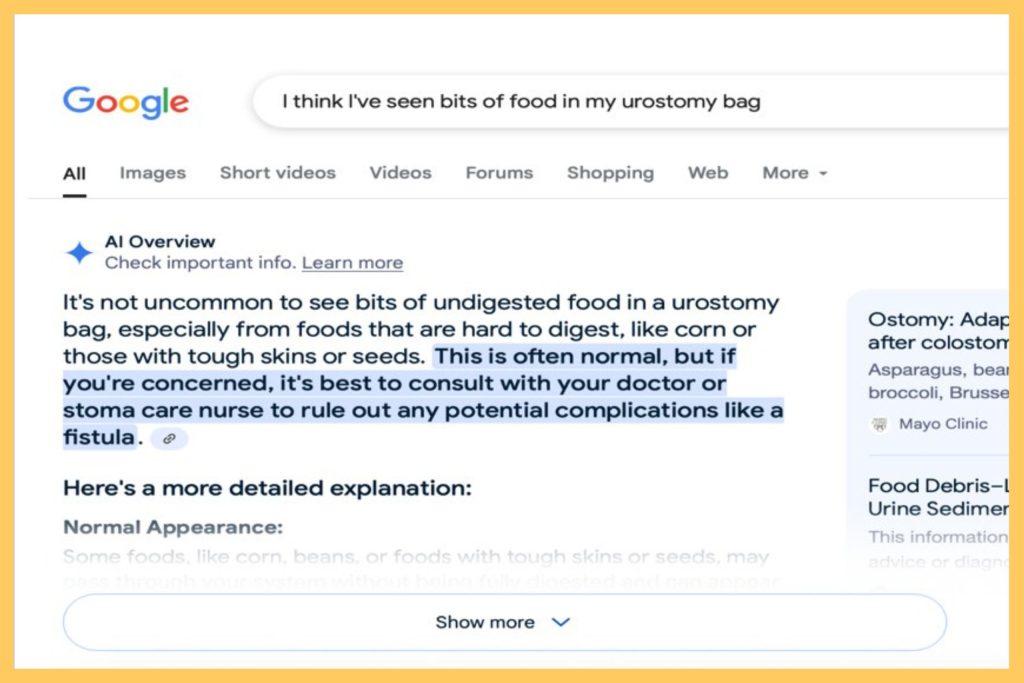
And the answers can be confusing, incorrect, and worrying. The picture below shows an AI generated response from Google to the statement ‘I think I’ve seen bits of food in my urostomy bag’. The answer suggests that seeing undigested food in your urostomy bag is not uncommon when, in fact, it is. This response actually relates to people with colostomy bags.
Additionally, AI is currently very US centric. For example, the four links at the bottom of the Bing example, all link to American resources, rather than UK ones. The danger here is that services and support for urostomates in the UK are different to the US, particularly when it comes to the NHS and sourcing supplies.
What do the professionals think?
Paul Russell Roberts is a Stoma Care Nurse Specialist and is passionate about developing protocols, policies and digital platforms that make a difference in urostomates’ lives:
“I’ve always believed that patients should have access to clear and reliable information. AI can make learning quicker and easier, and that’s a real positive, but it should never replace trusted sources. If you’re looking for information, check against places like the Urostomy Association or the NHS website. And if you’re ever unsure or worried about your urostomy, the safest step is always to speak to your stoma nurse.
AI is becoming part of everyday life, and it can be a great way to pull information together quickly. That’s helpful, but it’s important to remember it isn’t always specific or accurate for urostomies. Use it as a starting point, then check what you find against reliable sources or with your stoma care team.”
Can I switch off AI summaries from my search engines?
If you don’t want to see AI summaries in your search engine results, you can do the following:
- On Google, you can add -ai to the end of a search query to stop the summary box at the top of your search results appearing.
- For Bing, click the three horizontal lines in the top right hand side of the page and turn off the “Copilot response on results page” setting
- Yahoo doesn’t currently have an AI summary box.
Keep in mind, some organisations may use AI on their own websites. The UA does not.
In conclusion
Paul Russell Roberts sums it up:
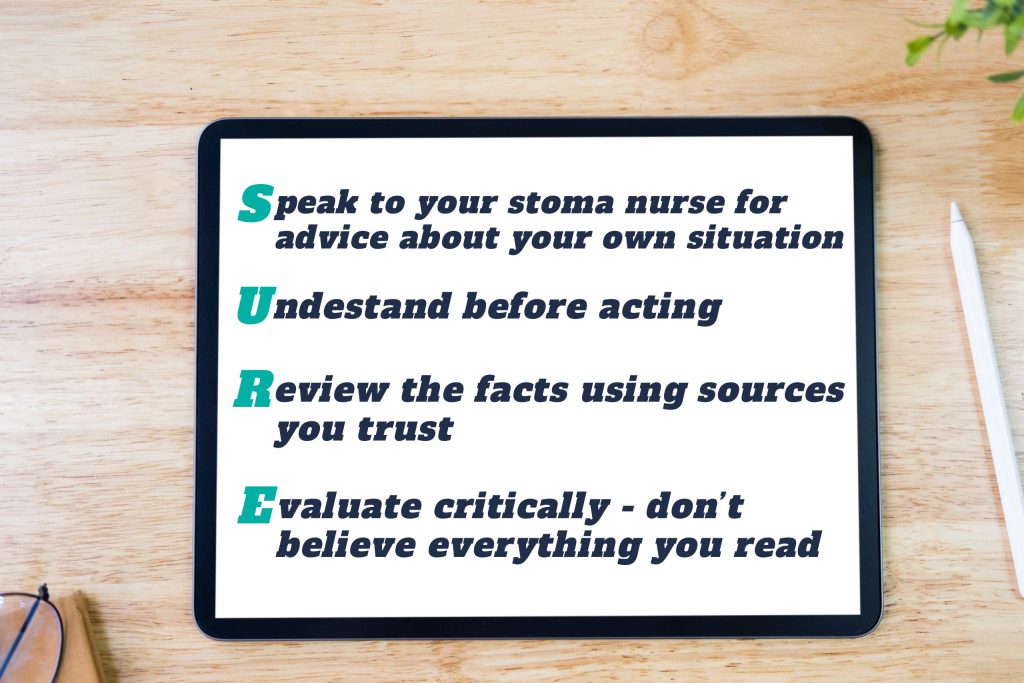
“AI is exciting because it puts knowledge at our fingertips, but in stoma care context matters. It can point you in the right direction, but the detail and reassurance still comes from trusted professionals and organisations. Always be mindful and use the steps to below to be SURE you’re getting the correct facts.
AI can be fantastic tool, but your stoma nurse is irreplaceable.”
- Our thanks go to Eve Sherratt-Cross, AI Safety Advocate, for writing this article, and to Paul Russell Roberts for his contribution. Published 18 August 25