By Hugh Rogers
I’ll never forget the day I noticed blood in my urine. Given my profession as a urologist, I knew exactly what that could mean. Though retired, I’d spent years meeting and investigating patients with the same symptom, and I understood that – at my age and with my history – bladder cancer was a real possibility. I hoped it would be a low-grade tumour that could be treated conservatively, but when the results came back they showed an aggressive cancer. My colleagues, many of whom I’d worked alongside and even trained, strongly recommended that I have my bladder removed.
Even knowing the reasons, it was still a huge decision. The hospital stoma nurses were really helpful to talk to, and I also spoke to a volunteer from the Urostomy Association. Looking back, that conversation was one of the most valuable parts of my preparation. Talking to someone who had already walked the same path gave me a level of reassurance that no textbook or medical explanation ever could.
My surgery went ahead in November 2023. Although it was carried out robotically, it was still a major operation lasting several hours. Afterwards, I developed a prolonged ileus, where the bowel temporarily stops working. Instead of recovering as quickly as I’d hoped, I spent two weeks relying on intravenous nutrition while my digestive system slowly woke up again.
No surprises
There were some frightening moments. One night I developed fluid on my lungs and found it difficult to breathe. As a doctor, I recognised exactly what was happening, which was both a blessing and a curse. I understood the problem and knew it could be treated, but I also knew all the complications that might follow. Sometimes medical knowledge brings reassurance; sometimes it simply gives you more things to worry about.
People often ask whether being a urologist helped. The honest answer is yes… and no.
I understood every test, every treatment and every decision. Nothing came as a surprise. But I also knew every possible complication, and that’s not always helpful when you’re lying in a hospital bed. I found myself on the other side of healthcare, and I gained even more respect for what patients cope with every day.
Getting active again
Once I got home, I decided I needed a goal. Mine was simple: I was going to ski again.
Recovery wasn’t about sitting still waiting to feel better. It became a training programme. At first, I could only manage short walks around the park with my wife Tina. We have a Jack Russell terrier who needs regular walks, which gave me another reason to get outside every day. The walks became longer, and I started gardening again. Gradually, I rebuilt the strength I’d lost.
Nine months after my operation I started taking part in Parkrun. I don’t run it particularly quickly – in fact, I mostly walk – but that’s the point. Parkrun welcomes everyone, whatever their pace, and every Saturday I could see that I was improving.
Recovery isn’t always a straight line, though. In early 2025 I suffered another setback when the connection between my kidney and ileal conduit narrowed, blocking one of my kidneys. I needed further surgery. Once again, I lost weight and muscle while recovering, and once again I had to build myself back up with exercise, good nutrition and determination.
It was frustrating, but I knew from the first operation that progress was possible. So I started again, one step at a time – walking with our dog, gardening, running, and a personal trainer to help me rebuild my core strength.
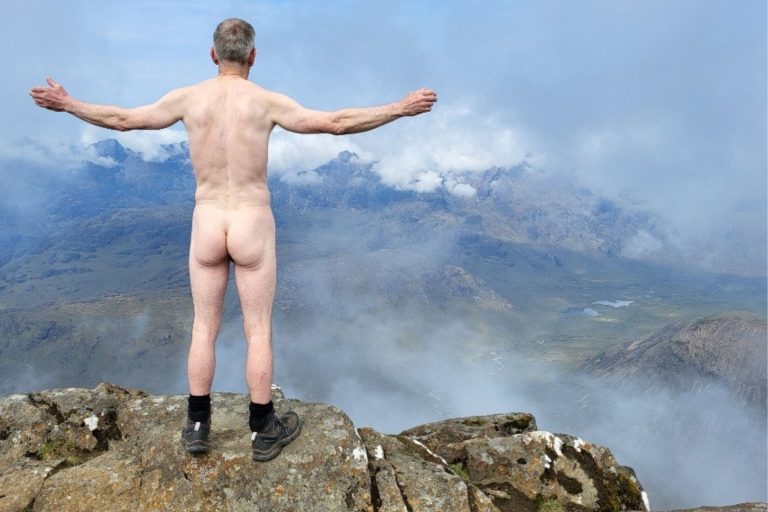
Finally, in March this year, with my wife, son and his girlfriend, I headed off to the French Alps. Standing at the top of that first slope felt like far more than a skiing holiday. It was proof that I was getting me back.
My new normal
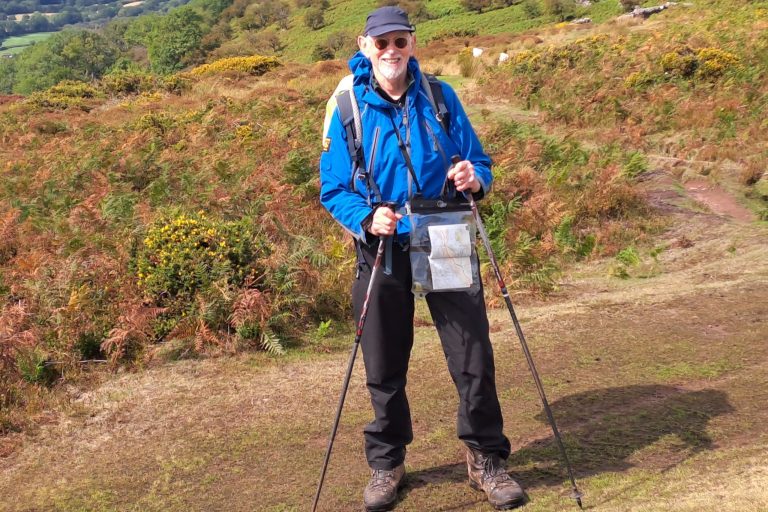
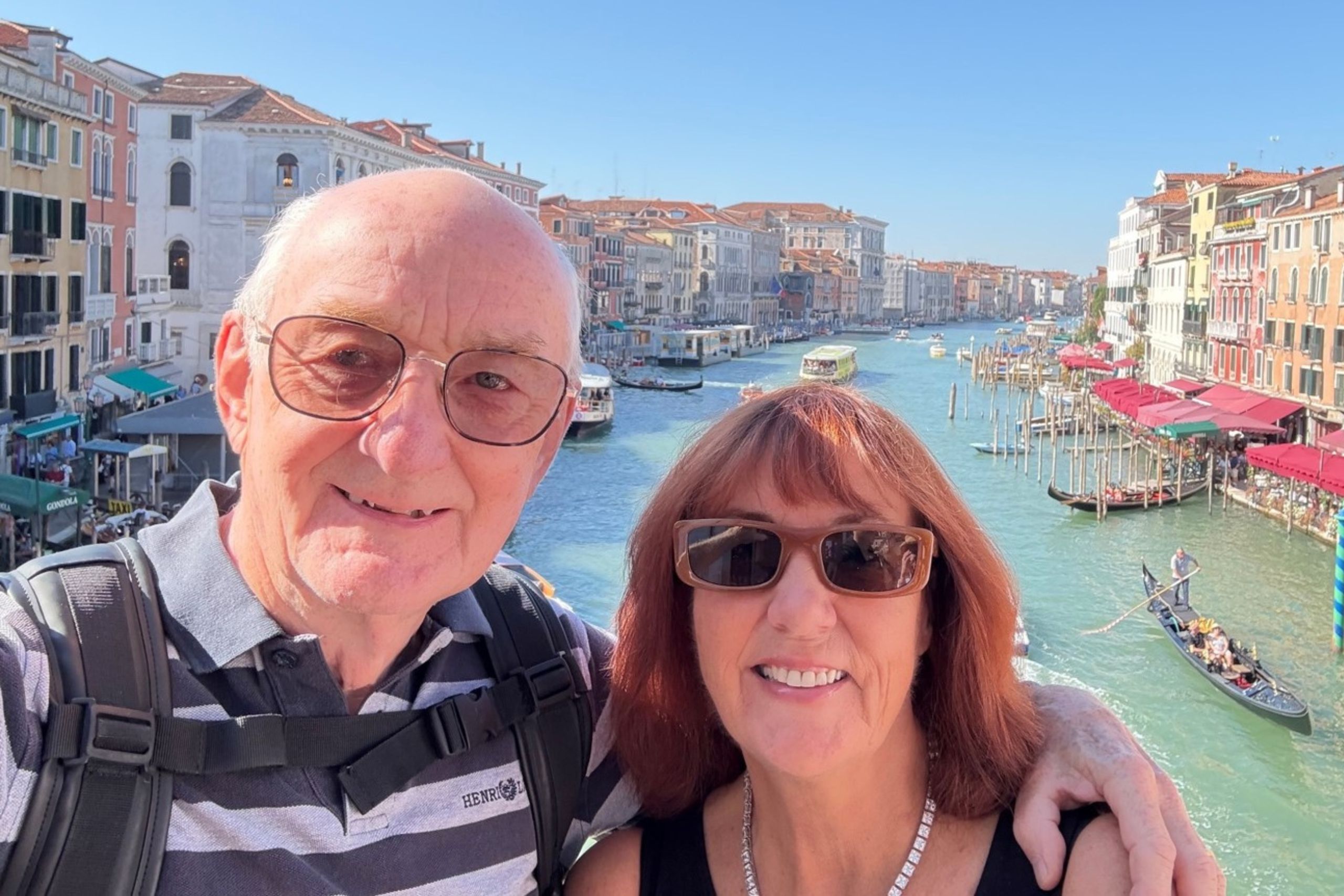
Am I exactly the same person I was before surgery? No. Major surgery changes you, and two major operations even more so. But I can do the things that matter to me. I play the violin in my local orchestra. My wife and I enjoy touring Europe in our motorhome. I look after a large garden. I walk the dog every day. I keep active and enjoy life.
None of those things has been limited by having a urostomy. In fact, that’s probably the biggest lesson I’ve learned.
Before my operation, I was far more worried about the stoma than I needed to be. Even as a urologist, I imagined it would have a huge impact on my lifestyle. It hasn’t.
At first, it feels strange, of course. Suddenly, there’s a bag and it takes time to adapt. But gradually it simply becomes your new normal. These days I hardly think about it. It hasn’t stopped me getting on with life.
People often worry about leaks. Personally, I’ve found them to be far less of an issue than I’d imagined. I’ve only had one mishap in nearly three years, and that was entirely my own fault because I’d let my bag become far too full before doing heavy gardening. Like everything else, you learn little tricks as you go along, and life becomes routine again.
Keep moving
Ironically, my experience has changed how I think about the advice I used to give my own patients.
When someone needed a cystectomy to remove their bladder, I often focused on the life-changing impact of having a stoma. Now I realise I had the emphasis wrong. The stoma itself is manageable. The real challenge is recovering from major surgery, rebuilding your strength and believing you’ll get back to living again.
That recovery takes patience, determination and a positive attitude. Some days you’ll only manage a little more than yesterday. But small improvements add up.
For me and others who’ve had bladder cancer, a urostomy is a lifesaver. Whatever the reason for yours, don’t lose hope and don’t let fear dominate your thinking. Yes, there’s a learning curve. But your urostomy doesn’t define you, and it certainly doesn’t stop you living a full life. Set yourself goals, however small they seem, and celebrate each step forward.
Why I support the UA
I find the Urostomy Association a constant source of tips and advice, keeping me up to date with the latest urostomy care. For me, this is a precious resource, never more so than when I first had my cystoprostatectomy, and the community gives me reassurance that I am not alone.
None of this happens for free, so I have chosen to make regular monthly donations. The UA doesn’t charge a subscription for members and if we want to make resources open to all regardless of means, those of us who can afford it need to support it so that it will be there for others in the future.