Written by Nicola Dames
Following last year’s Association of Stoma Care Nurses Congress, I had the privilege of meeting Samantha Sherratt, Transformation Director of the Urostomy Association, and Brian Fretwell, a passionate patient advocate living with a urostomy. Our conversation touched on the incredible power of sharing real patient stories, not just to educate, but to inspire. I mentioned how fortunate I am, through my work and lived experience, to meet so many remarkable people willing to speak openly about life after stoma surgery.
It was in that spirit that I reached out to Billy Ritchie, someone I’ve known for several years. Billy’s story struck me as one that perfectly embodies courage, humour, and the pursuit of confidence after life-changing surgery. What began as a simple Q&A soon became something much more, a testament to how survival can lead to rediscovery, and how self-acceptance sometimes comes from the most unexpected places.
A life changed overnight
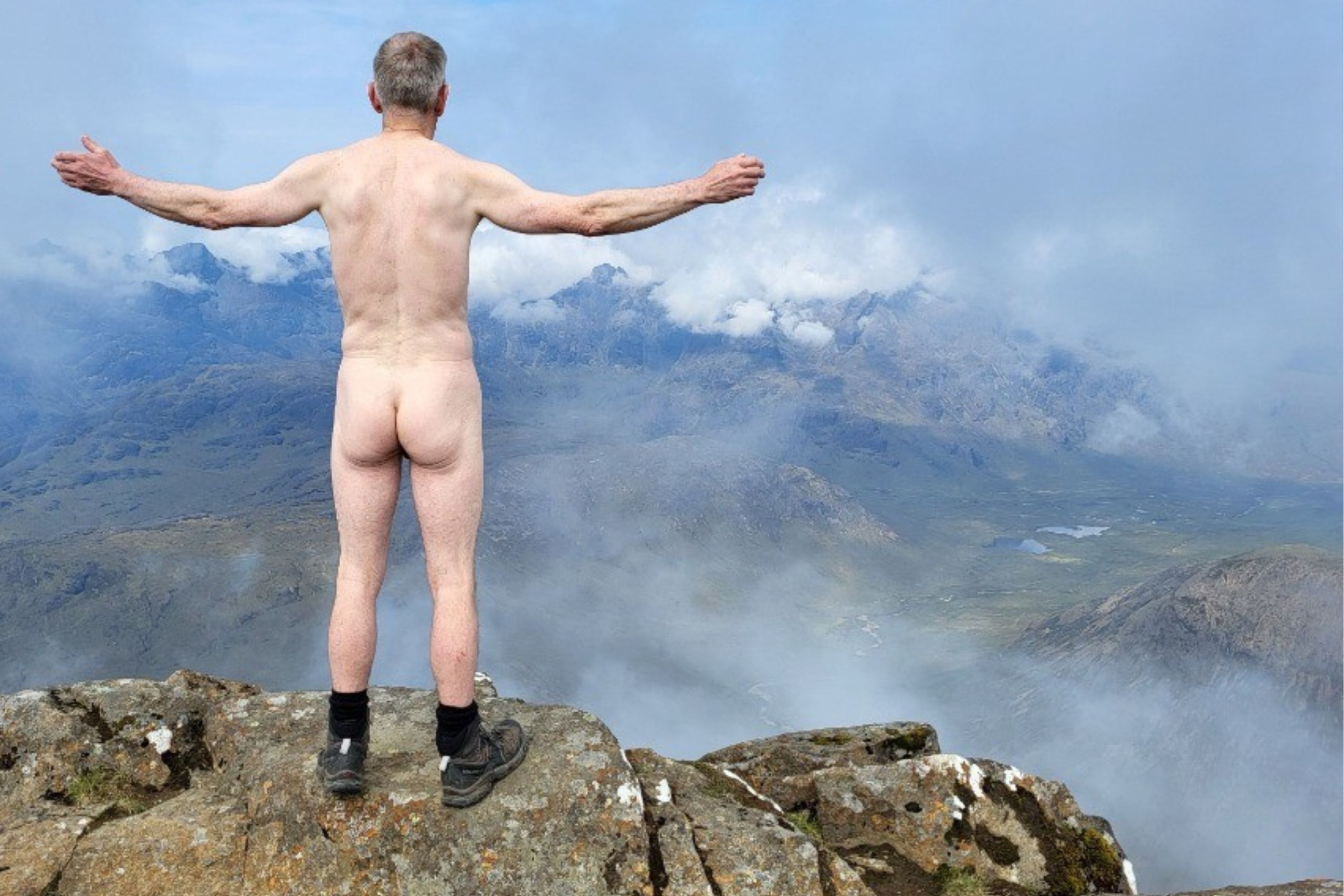
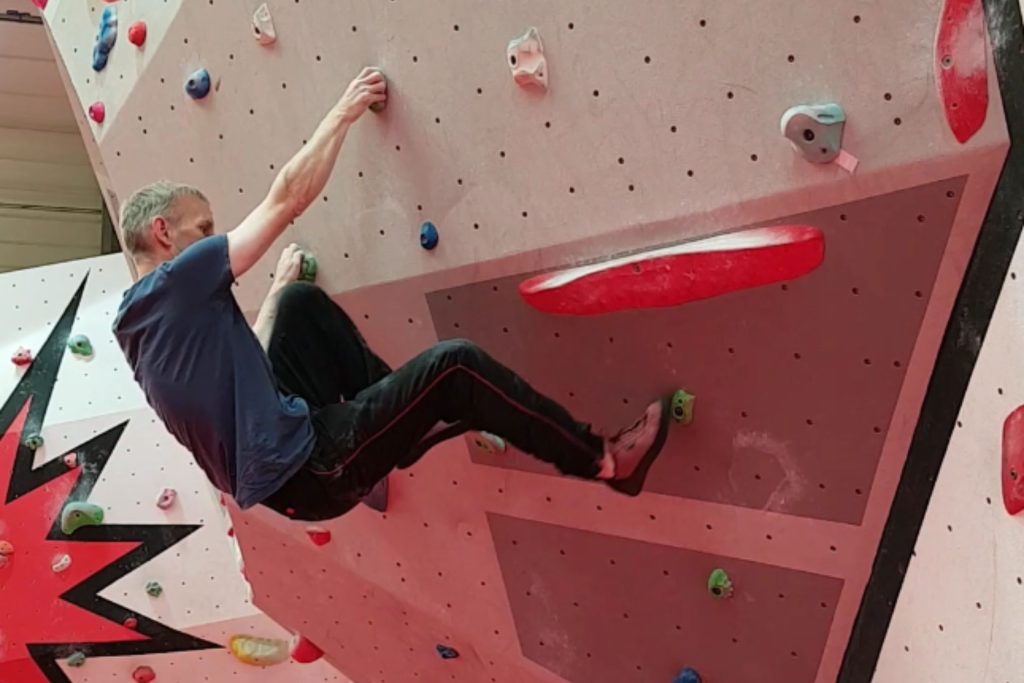
Raised in St Andrews, Billy is a self-described outdoorsman, he loved cycling, hillwalking, and later developed a passion for indoor and outdoor climbing. By the time he was in his mid-40s, life seemed steady, a settled home in West Lothian, children, and weekends often spent chasing Scottish summits.
That all changed in December 2010, when Billy was diagnosed with cancer of the caecum. What he expected to be routine investigations quickly escalated. An MRI revealed the tumour had fused to his bladder. “They told me they might have to remove not just my large intestine, but also my bladder,” he recalls. “To be honest, I wasn’t really taking anything in. The medical team were positive and upbeat, but I couldn’t see how I would survive. I just thought, they can do what they want, and I’ll see how it ends.”
Billy underwent surgery on 22 December 2010. It was extensive, removing his large intestine, part of his small intestine, bladder, and prostate, but crucially, it took all the cancer with it. Three days later, on Christmas day, he found himself in a hospital bed, reflecting on survival. “I realised I’d received the best Christmas present ever, life,” he says.
Recovery was far from easy. Nearly three weeks in hospital, hallucinations from pain medication, endless tests, and visits from multiple specialist teams blurred into one. Instead of returning home, Billy went to stay with his ex-wife and two children. “That helped a lot,” he says. “Along with my parents, siblings, and friends visiting, I felt there was light at the end of the tunnel.”
Rebuilding body and spirit
In early 2011, Billy began six months of chemotherapy. It left him physically drained and emotionally isolated. “I locked myself away during that period,” he admits. “I was living day to day.”
When treatment finally ended, Billy slowly began reclaiming the parts of his life that had once defined him. The hills, the movement, the sense of freedom. “I took a full year off climbing and mountain biking,” he says. “It was hard not to push too early, but I knew if I rushed it, I’d delay my recovery.”
Gradually, his confidence returned. A family wedding in August 2011 marked a turning point, the first time he felt like himself again. Over time, he learned to adapt his hobbies to his new reality. When he resumed climbing, he wore a Vanilla Blush support vest to protect his stoma. “At first I worried the harness would affect it,” he says. “But once I understood its moves, I was fine.”
Billy’s humour shines when he recalls a particularly memorable walk with his local Ramblers group. “We came across a fence and a stile, and as it was taking everyone ages, I decided to scissor-jump over. I landed perfectly, then felt my urostomy bag detach and whoosh! I was soaking wet.” Ever resourceful, Billy simply let the group go ahead, changed his bag discreetly, and carried on. “The funny bit,” he laughs, “was catching up with the others and seeing eight of the ladies squatting for a pee with bare bums on show!”
Facing the mirror
Despite his growing strength, another battle brewed quietly, one of body image. “I used to look at myself in the mirror and think, you look like a monster, a scar down your belly and a bag stuck to your side,” Billy says. “I thought, you’ll never get another girlfriend now.”
That self-criticism lingered even as his body healed. Then, one day, he read about naturist swimming, groups that swim naked, free from the social armour of clothing. “I thought, these people must be comfortable with their bodies. Maybe that’s what I need to try.”
Nineteen months after his surgery, he mustered the courage to visit a naturist swim 40 miles from home. The first time, he sat outside, panicked, and drove away. Four weeks later, he returned and walked in. “I told the receptionist, ‘I’m different, I wear a bag on my belly.’ She just said, ‘Everyone’s different. You’re welcome to swim.’”
That moment changed everything. “The scariest part is thinking you’ll be the only one naked,” Billy says. “Once I got in, nobody cared. Nobody stared. I wasn’t a freak, I was a person.”
After that night, he felt elated. He went back. Again and again. And with each visit, the weight of self-consciousness lifted.
Finding freedom and confidence
Today, Billy is Regional Vice Coordinator for the Scottish and North East England region of British Naturism, helping others experience the same liberation that transformed his life. “It’s an incredibly inclusive community,” he says. “I’ve met people with scars, mastectomies, amputations, and stomas and nobody judges anyone. We only have one life, and it’s short. Being socially naked isn’t scary; it’s freeing.”
Over the years, Billy has attended countless naturist events from formal Burns Suppers and ceilidhs to naked bike rides in York and Newcastle. He’s tried body painting in Blackpool, ten-pin bowling, even walked over hot ashes. “At one event I did a handstand on the glass floor of Blackpool Tower while a TV crew filmed us from below,” he says, grinning.
Naturism, for Billy, became more than just confidence-building, it reshaped how he saw humanity. “Clothing communicates identity,” he says. “It tells people what job you do, how much money you earn. But naturism removes all that. Nakedness is an equaliser. You realise we’re all just people.”
Even in naturist settings, Billy takes practical precautions, wearing a waistband when swimming so his bag stays protected. He often uses black or neutral bags like Salts Confidence BE, which blend naturally with his skin. “In the early days, my stoma nurse told me, ‘Don’t let it rule you.’ Back then, I didn’t understand. Now I do. My stoma doesn’t dictate my life – it’s just part of me.”
His adventurous streak hasn’t dulled either. “I still love hillwalking, climbing, and travel,” he says. “This year I was in Spain for a naturist holiday, then rock climbing in Kos. I recently had another hernia repaired, so I’m building back up, but I’ll get there.”
Living proof that confidence can be relearned
Billy’s story is as much about mental resilience as it is physical recovery. His honesty about fear, humour in mishap, and boldness in embracing naturism all speak to something larger that true confidence doesn’t come from perfection, but from acceptance.
As he puts it: “It’s not the end of normality. Your lifestyle may need to adjust, but it doesn’t have to change completely it can get better.”
Nicola’s reflections
What struck me most about Billy’s story is that it challenges almost every stereotype about masculinity, body image, and living with a stoma. His willingness to be open, to find humour in awkward moments, and to face stigma head-on shows the strength that can come from vulnerability.
“Naturism may not be for everyone, but Billy’s journey reminds us that body confidence isn’t about how you look, it’s about how you live. By daring to strip away fear and judgement, he’s shown that life after a urostomy can be not just full, but fearless. And that is something truly worth celebrating.”