By Peter
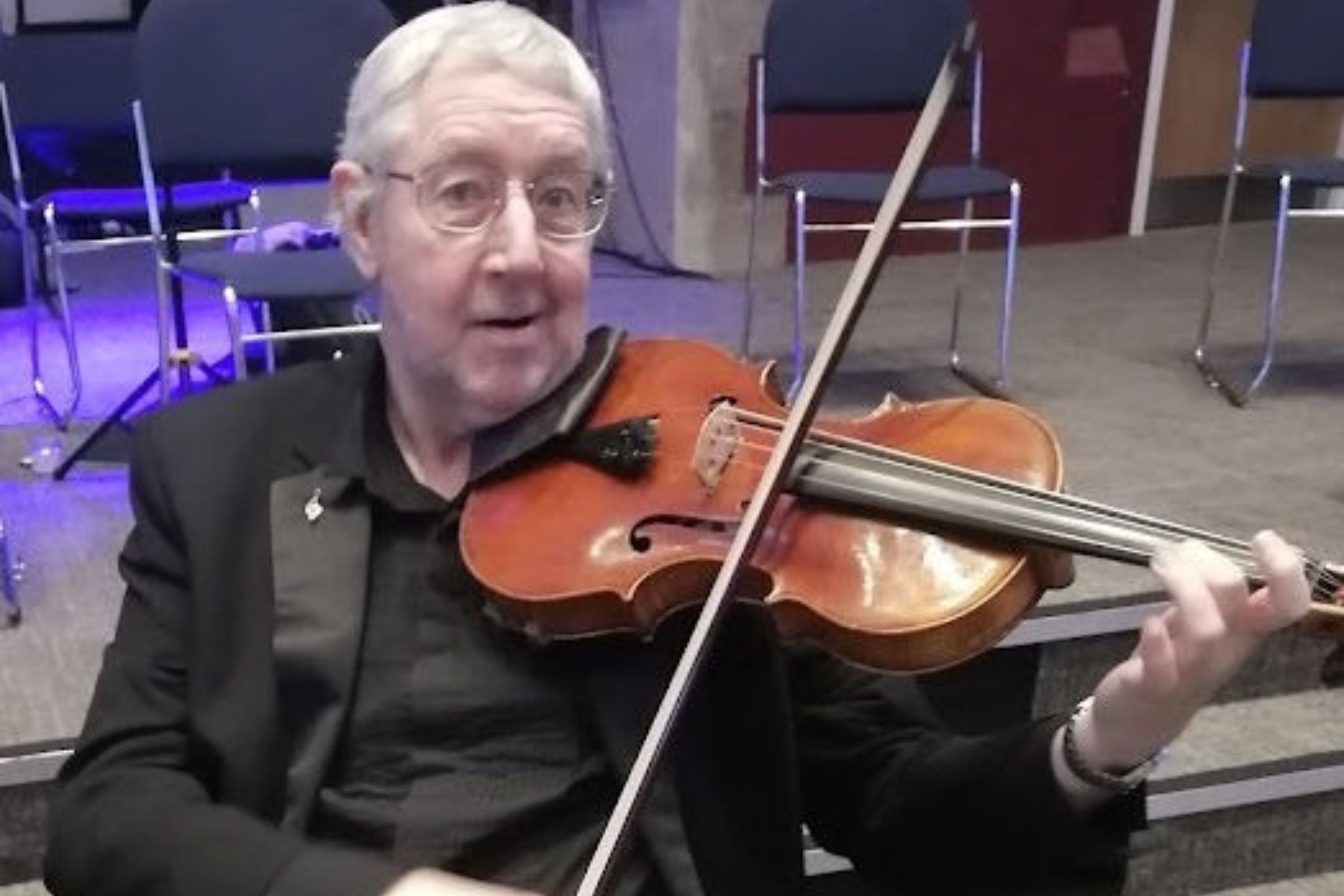
I’m 69 and live in Leicestershire. Until my retirement in 2017, I was a teacher. Music is a passion, and as a keen violinist/violist I perform in around 25 orchestral concerts per year. My journey to cystectomy (bladder removal) began in 1996, and I’ve received all my medical care at the General Hospital in my home city.
Out of the blue, I developed sharp and uncontrollable pains ‘down there’, coupled with a frequent – and urgent – need to urinate. Despite never having had a positive UTI test, my GP prescribed six different antibiotics before finally referring me to a specialist. A sequence of tests followed. I was extremely anxious, convinced this long-term problem was really serious, if not terminal. (As I discovered, internet research for health information isn’t always reassuring!).
Diagnosis made
Eighteen months later, the diagnosis of interstitial cystitis (IC) was made, mainly as a consequence of having eliminated everything else. In some ways, hearing this conclusion was a relief, since the condition is not life-threatening. However, the negative side was that since there’s no cure for IC, management was the only option. They don’t even know how the disease originates.
In 2014, things became very much worse when I started developing Hunner’s ulcers in my bladder. These were incredibly painful, and I could find no effective pain relief. Fortunately, the ulcers could be removed with day case cystoscopy/diathermy. But they always came back after a few weeks or months, which felt so discouraging.
Having surgery to remove my bladder was mentioned several years before I went ahead with the operation. After my last cystoscopy, the saint of a man who was my urologist suggested the time might have come to go ahead, since my bladder capacity had shrunk to that of a wine glass. Certainly, by that stage I was reluctant to go out, unless I knew where all the toilets were. Any activity involving being out of the house was fraught with anxiety.
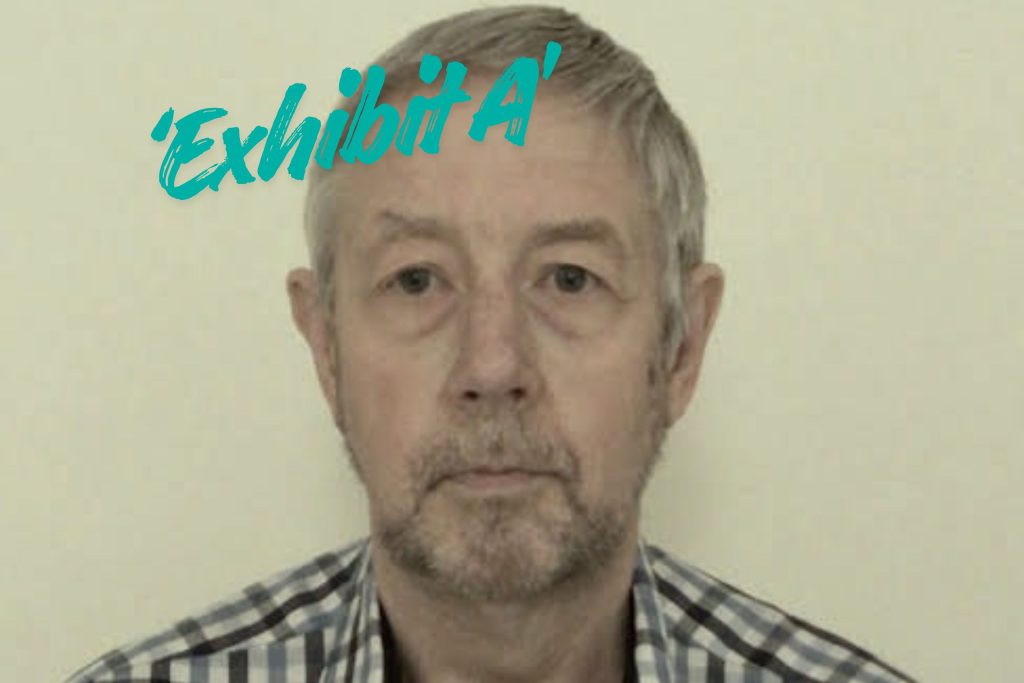
‘Exhibit A’ is my passport photo, from 2019. Whatever the appearance, it was actually in colour. It confirms the saying, “If you look like your passport photograph, you’re not well enough to travel.” On days when I had to go home from work because I felt so unwell, a colleague sometimes asked if I was safe to drive because I looked so ill.
My urologist referred me to a surgeon, who I met in 2022. A reassuring half-hour conversation with her confirmed that cystectomy was a hopeful way forward. Further to that, I also met with a stoma nurse face-to-face and another one by phone. They set up two phone conversations with urostomy patients. It was so helpful to hear their experiences and I’m grateful to them for giving up their time.
Similarly, urostomates’ accounts of their experiences in the UA’s magazine also served to encourage me that surgery could have a very positive outcome. All of this support was much appreciated and very reassuring.
Going ahead with surgery
Making the big decision to proceed with surgery was very difficult. There was a real possibility of phantom pain afterwards. Plus, I wasn’t sure if I would cope with having a stoma for the rest of my life, a decision made harder by knowing the surgery was irreversible. My digestive system had been destabilised by my bladder inflammation. If that didn’t settle down, the surgery would have been futile. These considerations mean I have no regrets about not having had the surgery sooner.
My operation, in March 2024, went well, and I had an eight-day stay in hospital. Prior to discharge, a stoma nurse showed me how to change the pouch and manage my stoma. Following that, I stayed at my sister’s for several weeks. Throughout my entire health journey, she and my brother- in-law gave me unstinting support, which made the whole thing much more bearable. When she was still alive, my mum was also very supportive.
Out of hospital, I received three home visits from stoma nurses. It is a common experience to have leaks from the pouch in the early days. I bore this, knowing that everyone masters leak-free bag use eventually. I think it took me about ten weeks to achieve that. After six weeks, the nurse measured my stoma, which enabled pre-cut bags to be made – these streamline the changing process. Dealing with the bag made me quite anxious at first, but I soon got into the rhythm of doing it.
Recovery and beyond
I was told full recovery from surgery might take six to 12 months. Six weeks after my op, all pain had gone and I felt recovered from the surgery itself. I was slightly puzzled by the mention of a six-month recovery time. However, as I became more active, I realised how much surgery had drained my stamina and core energy. Tiredness was quicker in coming, and I was limited in things like walking longer distances. This gradually improved over nine to ten months, and then I was fine again.
Before writing this, I thought a lot about the overarching message I wanted to convey. Having a general anaesthetic and major surgery is a daunting prospect, especially if this is your first time. I know it will cut no ice, but however enormous this event is for us, it is routine for the medical staff who will care for us.
I think it’s true to say the actual experience won’t be as bad as you imagine it will be. Try to focus on the period from about three months after surgery. All my fears and imaginings about living with a stoma dissolved away. Managing the bag is very simple, once you establish a routine. I change mine every two to three days and it takes about three minutes. Changing on autopilot is usually okay, though sometimes I wonder why my leg is wet when I stand up – I forgot to put the stopper in the bag!
A couple of times my bag has fallen off when I stood up because I forgot to remove the plastic backing on the sticky pad. Once in place, I don’t even know my bag is there. No pain, no sensations. Rest assured that after a few weeks, having the stoma will recede into the background, and normal life will be largely resumed, little different to what went before.
One thing I felt I must include is to say, whatever the frustrations one might have with the NHS when it comes to trying to reorganise appointments or sort prescriptions, once I was in the system, it was a very different story. Hand on heart, I can say that all aspects of my treatment and support before, during and after surgery were uniformly excellent.
No regrets
In the end, it boils down to the question, am I glad I went ahead with surgery? The answer is an unqualified yes. To me, it seems almost miraculous to have a normal life back after so many years. I can go out as I please and do what I please. For concerts, I can go onstage and not worry about what horrors my bladder will throw at me during the performance. It is good to enjoy a more normal relationship with toilets. I am a very happy man, though I’m still struggling to find the shoes to match the bag.