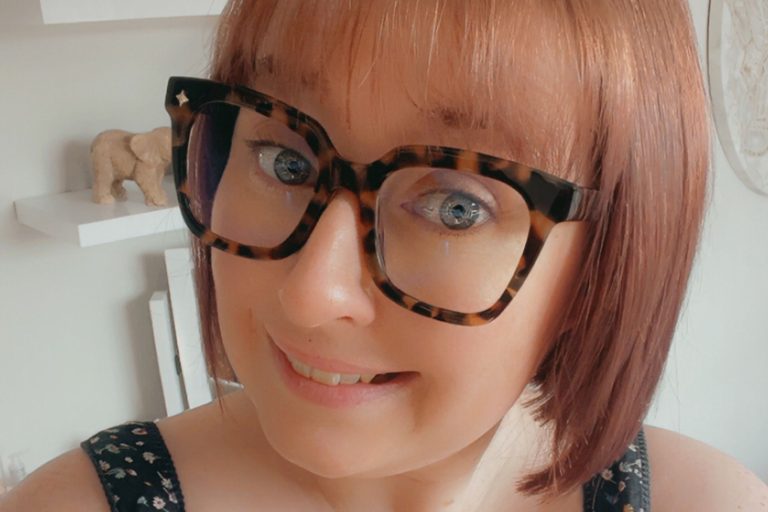
By Niki Wells
I often struggle to remember my life before interstitial cystitis (IC) – a chronic bladder condition – took hold. I’m 40 now and my symptoms started when I was 21, about a year after my son was born. The intense burning pain and pressure in my bladder, and symptoms of a UTI but without a bacterial infection, came and went. I couldn’t get a diagnosis, so just tried to carry on as best I could.
Before this, I had a busy, happy life. I’d worked in pubs from the age of 16, eventually helping to run one that I loved. I had lots of friends, a social life, and confidence about the future. As my symptoms worsened, all of that became harder to hold on to. Eventually, I had to leave the job I loved because of my condition.
There were countless treatments and procedures, which felt relentless. I had urethral dilations and bladder distensions. At one point my bladder could hold around 950ml, but over time that reduced to just 200ml. They tried Botox injections into my bladder wall, which left me unable to empty it properly. I was prescribed endless medications – more than 250 different drugs appear on my medical records, from antibiotics and anti-inflammatories to nerve pain relief.
Often, I was treated for UTIs, despite never showing the usual markers. And I became all too familiar with hospital admissions, flare-ups and severe pain. Eventually, I was referred for pain management and prescribed powerful Buprenorphine patches. By that point, I was spending more time in hospital than at home.
It was four long years before I received an official diagnosis of IC. As well as having the classic symptoms of the condition, I also had vulvodynia, which is a persistent, unexplained pain around the vulval area, and fibromyalgia, which causes body aches and pains and flu-like symptoms.
By this time, my world had shrunk and I no longer had a social life. It was hard, but I always tried to hang on to the positives because that’s what keeps you going. When you are struggling, self-care is more important than ever. For me, it was a haircut by a mobile hairdresser or getting my eyelashes tinted. I also found it soothing to have a candlelit, hot bath with Epsom salts while I listened to music.
I don’t know what I’d have done without my partner Dany. My IC really tested our relationship, but he has been so supportive. When the pain was so bad that I couldn’t get off the sofa, he made sure all the housework got done, walked the dog and looked after my son. He came to every hospital appointment with me and has been my rock throughout.
Nothing left to lose
Over the years, consultants mentioned the possibility of a urostomy, but it never felt like a serious discussion. That was until I felt I had nothing left to lose. Nineteen years on from my first symptoms of IC, and 14 years on from my diagnosis, I brought the subject up myself.
Before my consultation, I researched everything I could about urostomy surgery. I went in armed with a folder full of information about IC, cystectomy and urostomy surgery. I had even researched my surgeon’s experience and outcomes. After reviewing everything, my consultant looked at me and said something that changed my life: “I actually agree; this is the only way forward.”
He was upfront with me about the risks. After all, a cystectomy is a major operation. My response was equally honest. “I’m not living now,” I told him. “So, I have nothing to lose.”
Life-changing surgery
In 2023, I underwent a cystectomy at the Churchill Hospital in Oxford. I met the stoma nurse, and she was really helpful, explaining what would happen before surgery and what to expect when I woke up. The clinical information was there, but what was missing was the psychological preparation to help me get used to my urostomy. Stoma surgery is life-changing. I went to sleep as Niki the IC patient and woke up as Niki with a urostomy.
I remember my consultant telling me that the operation had gone well, my bladder and urethra had been removed, and now I could go home, recover and build a life. Those words stayed with me.
For years, my identity had revolved around pain, hospital visits, fear and survival. Suddenly, the thing that had dominated my life was gone. It was wonderful, but it was also overwhelming. Nobody really prepares you for what happens when your illness is no longer dictating your life.
For a long time after surgery, I struggled with that adjustment. For me, food had become associated with pain and flare-ups. Before surgery, I survived on five ‘safe’ foods and filtered water because almost everything else triggered symptoms. Even after my bladder was gone, it took years to trust food again. I had to learn what I liked, what I didn’t like, what flavours I enjoyed and how to make plans without worrying about ending up in hospital.
In many ways, it felt like learning how to live all over again.
Humour helps
Physically, too, my journey has not been completely straightforward. I later had my gallbladder removed and experienced complications that led to further health challenges. But when it comes to my urostomy itself, I have had no issues at all. In fact, my stoma and I get along brilliantly. His name is Moby – short for Moby Dick – because he has quite a flow and reminds me of a whale’s blowhole!
Humour helps. Naming a stoma might sound silly, but for many ostomates it creates a connection and helps us accept this new part of ourselves. I know people with stomas called Rose, Squirt and all sorts of other names.
The important thing is making peace with your stoma and recognising that it is there to help you. My urostomy has improved my quality of life beyond anything I imagined possible. I am no longer in pain, and most days I forget about my stoma altogether until I think, “I should probably empty my bag.”
Dany continues to be there for me. We have been together for 16 years. He learned how to change my bag, what a healthy stoma looks like and what warning signs to watch for.
I’ve also found incredible support through peer groups. Connecting with people who truly understand what you’re experiencing makes a huge difference. Finding a ‘bag buddy’ through the Urostomy Association – someone further on in their journey – was invaluable for reassurance and practical advice.
Raising awareness
One thing I feel strongly about is the need for greater awareness of urostomies. Compared with colostomies and ileostomies, urostomies often feel like the forgotten stoma.
I have attended appointments where healthcare professionals have not understood what a urostomy is or how it works. After my surgery, there were nurses on the ward who had never changed a urostomy bag. I found myself repeatedly explaining my stoma and how it had been created.
At a time when patients can feel vulnerable and uncertain, that lack of awareness can make people feel invisible.
If I could say one thing to anyone facing urostomy surgery, it would be this: anxiety is completely normal. Ask every question you need to ask. Learn as much as you can. Make sure you understand the surgery and feel comfortable with your decision. Learn how to care for your stoma, how to stay hydrated and what to look out for.
Most importantly, don’t struggle alone. If you are finding it difficult to adjust, speak to your stoma nurse, consultant, family or support groups. There is help out there, and people who understand exactly what you are going through.
Back in control
My life today is unrecognisable, thanks to my newfound freedom. I have travelled abroad with my family for the first time since I was a teenager. I enjoy days out with friends. I have an allotment, a beautiful home and precious time with my son, who is now 19. I can spend time with my nieces without paying for it afterwards in pain.
I have completed seven training courses and am now qualified in supporting children and young adults with special educational needs.
I turned 40 recently, and for the first time in a very long time, I feel in control of my future. People sometimes ask me how I feel about my urostomy. The answer is simple – I love it. Moby has given me my life back.